News
Fapla International Cricket Stadium in Nepal: The 50,000-Seat Dream Dhangadhi Has Waited a Decade For
November 23, 2026
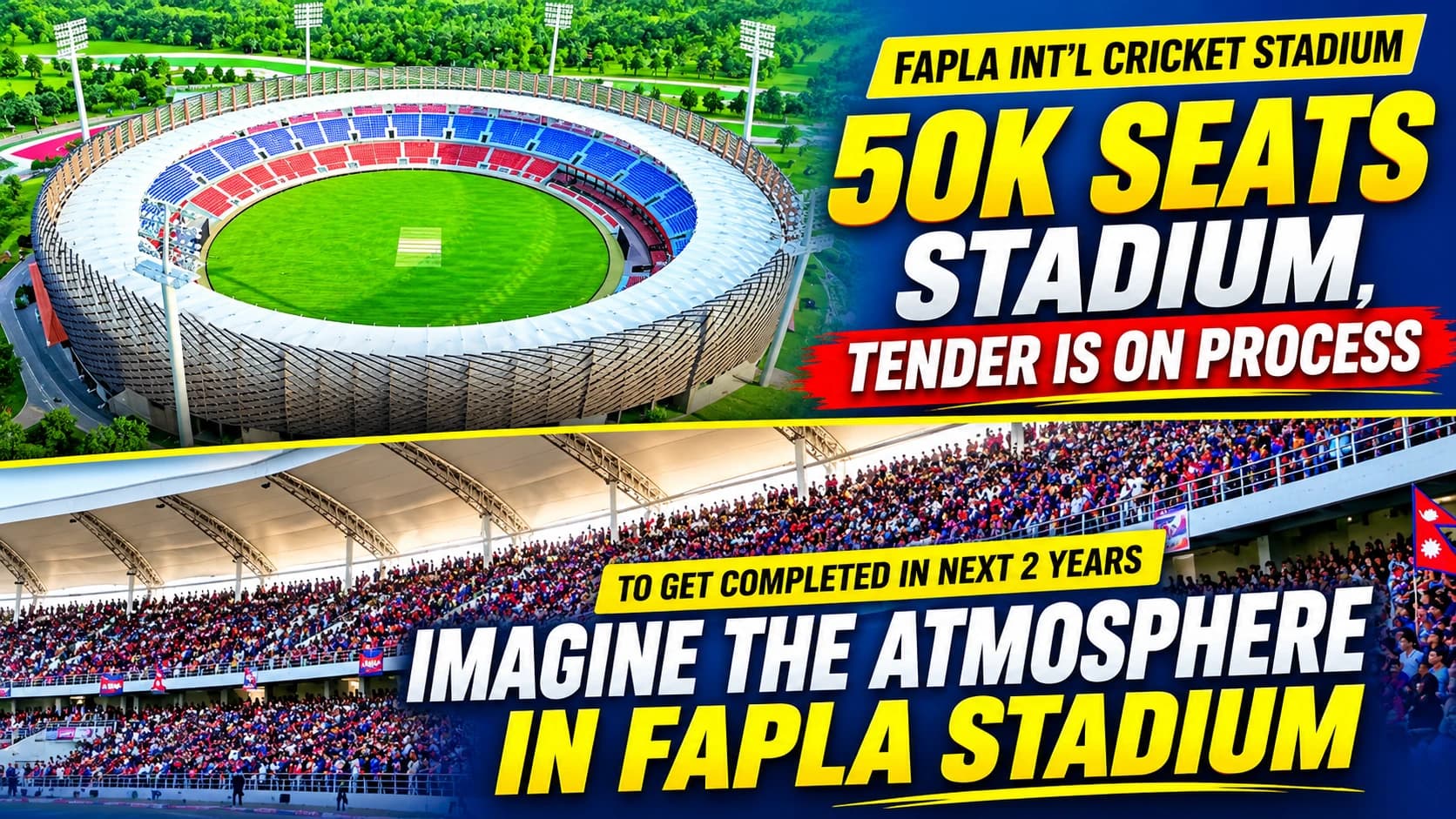
The Government of Nepal has invited bids to build the Fapla International Cricket Stadium in Dhangadhi, Nepal. The tender notice, issued on 20 November 2026, is the first concrete step for a project Dhangadhi has waited nearly a decade for—a 50,000-seat international stadium with a sports village on 38 bigha of land that will one day be the home of Sudurpaschim Royals. Here is everything to know about it: the plan, the tender, the wait, and what happens next.
The plan in numbers
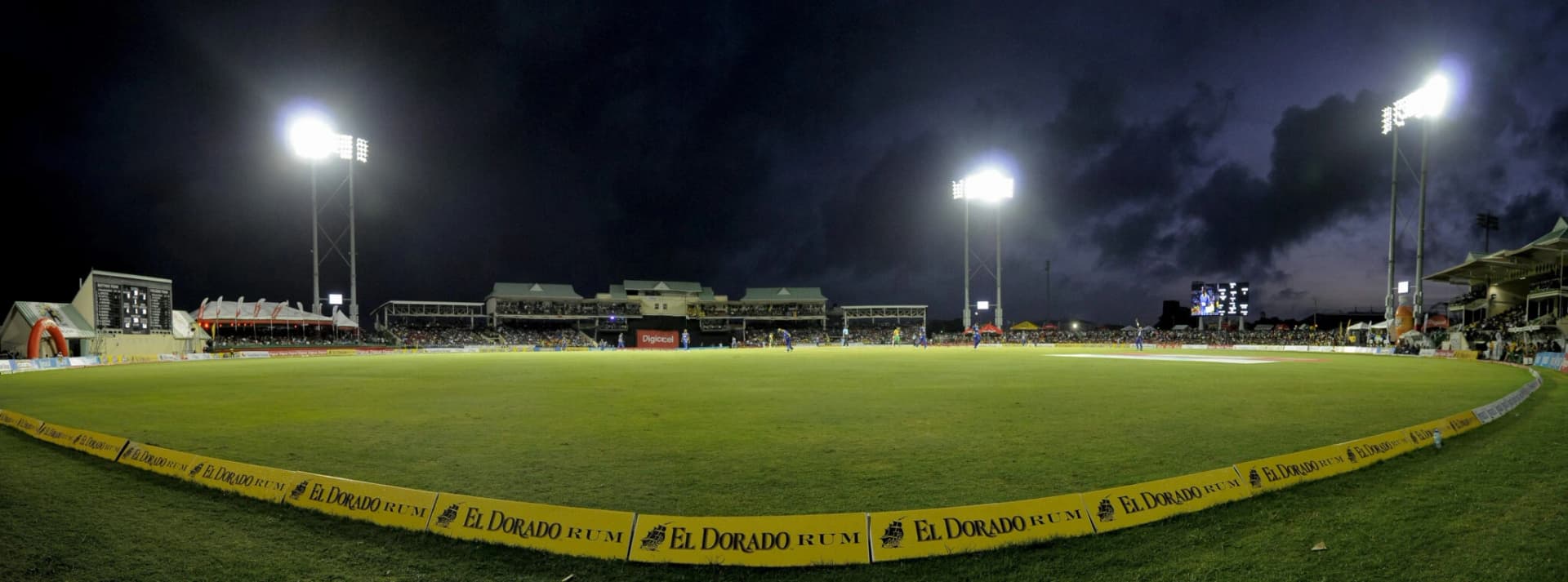
The ground already exists in basic form—green turf and some concrete seating are in place, and it hosts domestic tournaments. The international stadium around it is still to be built.
The tender: what is actually being built first
The National Competitive Bidding notice, issued on 20 November 2026 (Mangsir 4), covers the first physical works: filling and levelling the existing ground surface to prepare the playing field and block construction along the front section of the pavilion. It was issued by the Federal Urban Development and Building Construction Office in Kailali, under the Department of Urban Development and Building Construction of the Ministry of Physical Infrastructure and Urban Development, at the initiative of Physical Infrastructure Minister Sunil Lamsal. Bidding runs online through the Public Procurement Monitoring Office's electronic government procurement system.
Contractor selection will use the Single Stage Two Envelope method: bidders submit technical and financial proposals together but in separate envelopes, with the technical proposal assessed before the price is opened. Bidders need an average annual construction turnover of at least Rs 138.1 million (excluding VAT) and must have completed at least one similar RCC frame project worth more than Rs 110 million. The bid security is Rs 5.4 million—a deposit, not the value of the work—with bids valid for 90 days from opening and the security valid for 120 days. The notice states no contract value for this package.
It is worth being precise: this tender covers ground preparation and the front of the pavilion. It does not, by itself, build a 50,000-seat stadium. But it is the first package of works with dates, thresholds, and a security amount—the kind of document a contractor can actually respond to.
The decade of waiting
Fapla's story starts before the NPL existed. In 2073 BS, the ground hosted the Dhangadhi Premier League, the country's first franchise cricket competition, played there because Dhangadhi had no proper cricket ground of its own. A campaign to turn Fapla into an international stadium grew out of that tournament, and a 3D design of the proposed stadium was released as far back as 2016.
The man who has carried the campaign longest is Subash Shahi, chairman of the Fapla International Cricket Stadium and Sports Village Infrastructure Construction and Development Committee and a former cricketer, who is also the stadium's architect. He has said construction was delayed mainly by complications related to land acquisition—seven to eight years have passed, he said, but construction has still not moved forward as expected.
The promises, meanwhile, kept coming. The minister for education, science, technology, and youth and sports, Sasmit Pokharel, visited the site with infrastructure development minister Sunil Lamsal, and both promised to give the project priority. Pokharel returned in April for an on-site inspection, confirmed that land acquisition, the detailed project report, and the environmental impact assessment were all complete, and said the project was in the National Project Bank, with the focus turning to budget allocation and swift implementation. The chief minister of Sudurpaschim Province, Kamal Bahadur Shah, has said the provincial government has given the project high priority and will press the federal government for additional budget. In the budget for fiscal year 2083/84, Finance Minister Dr. Swarnim Wagle announced that the design of the Fapla stadium would be reviewed and an investment modality prepared.
Each of those statements was real, and each is now months old. Until the design review and the investment modality produce a funding decision, the full stadium cannot move from design to construction. The tender notice changes one thing: for the first package of works, at least, the bidding has begun.
Why Dhangadhi needs it more than anywhere
The gap between Sudurpaschim's talent and its facilities is the sharpest in Nepali cricket. Nearly half of Nepal's national cricket team comprises players from Sudurpaschim — Binod Bhandari, Dipendra Singh Airee, Sher Malla and Lokesh Bam among the men — yet the province does not have a single proper cricket stadium, according to Bikram Bist, a board member of the Cricket Association of Nepal and president of its Kailali chapter. Players are still forced to practise on open fields and riverbanks.
Something is being built beside Fapla, and the contrast is hard to miss. With private investment, construction has begun on a smaller ground near the Fapla site, on five bigha of land, with six pitches and boundaries of 65 to 75 meters built to international standards. The foundation stone has been laid, wall construction and ground levelling are complete, and pitch construction has begun under curator Madhav Pathak, who prepared the Extratech Oval in Rupandehi. That ground is not the stadium—it is a separate, smaller venue, built by private investors including Shahi himself, meant to give Dhangadhi a working cricket ground while the big project waits. Its progress shows what can move quickly when the funding is in hand.
Why it matters for the NPL
Every match of every season of the league has been played at the TU Ground in Kirtipur, on the outskirts of Kathmandu, for three years. The teams carry the names of provinces, but none of them has played at home. Last season, Sudurpaschim Royals supporters travelled from Mahendranagar by a reserved bus to watch their team play a home game in someone else's city.
Kirtipur itself has been improved rather than replaced. A first phase of upgrades added 10,000 seats and floodlights, and the government has approved a Rs 10 billion master plan to take seating capacity to 30,000. But the ground sits on university land, and the lease has run out — Tribhuvan University, citing disruption to classes, refused in the spring to renew it, and a new arrangement is still being negotiated.
The league, meanwhile, has grown faster than its grounds. Revenue rose from Rs 276.9 million in the first season to Rs 473.6 million in the second, and each franchise received Rs 20.23 million as its share of the second season's profits. This season, 59 overseas players from 16 countries signed up. Five stadiums are listed as under construction elsewhere in the country — in Morang, in Chitwan, two in Dang and at Fapla in Kailali — but none is finished.
The timing of the tender is hard to miss. The notice went out on 20 November. The next day, Sudurpaschim Royals beat Lumbini Lions by 10 wickets in the NPL final at Kirtipur, with George Munsey's unbeaten 125 carrying them to a maiden title at the third attempt—hours after the title was won, Prime Minister Balendra Shah announced that each of the eight NPL clubs would get its own floodlit stadium, with the league moving to a home-and-away format from its sixth edition. In that announcement, Shah said the construction process for the Fapla stadium had already moved forward, while preparations for the other seven grounds would begin within three months. The tender notice is the document behind that claim: the Fapla process had moved forward because the bidding notice was already out.
What happens next
The immediate next step belongs to the bidding process. Firms will collect the documents from the electronic procurement system, prepare their technical and financial proposals, and furnish the Rs 5.4 million bid security. Once bids are opened, the technical strength of each bid is judged before its price is considered, and the winning bidder will take up the ground works and the pavilion-front blocks. Bids stay valid for 90 days from opening, which sets the window in which the contract must be awarded.
Beyond this package, the questions remain open. No completion date has been announced for the Fapla stadium, and no budget has been published for the full construction beyond the earlier estimates. The Prime Minister's announcement says the other seven club stadiums will see their processes begin within three months, and that all eight grounds will be built through the Ministry of Infrastructure Development — but it does not specify construction budgets or completion deadlines for any of them. For now, the one fact that has changed is concrete: for Fapla, at least, the bidding has begun.

NPL T20 Team
Written by the NPL T20 Team — cricket writers and editors covering the Nepal Premier League 2026. We share match reports, player profiles, points table updates, venue guides, and fantasy tips, verified through official and local sources.